
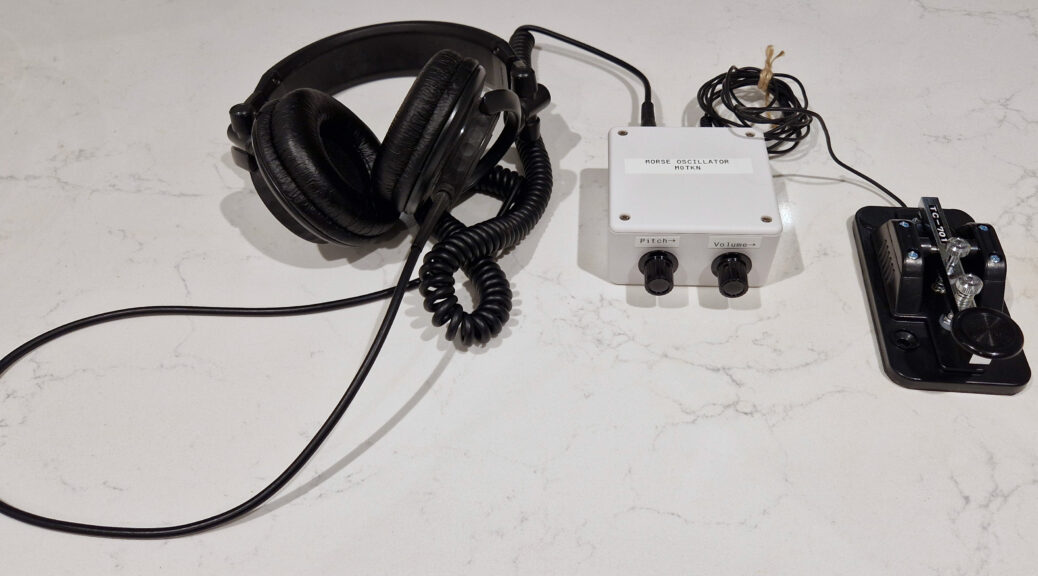
In addition to learning to read Morse, I need to learn to send. The advice seems to be that I should be able to read all the letters and numbers at a reasonable speed first, because this helps to put the rhythm of the letters into your head, so I’m plugging away at that.
Although I played with a Morse Key as a kid, I know almost nothing about them. However, following the advice of an expert in an on-line meeting, I have bought an inexpensive ‘Himound’ straight key to start with. In fact I could only find this model with a practice buzzer, but this has a horrible high-pitched squeal. So I have connected a lead with a 3.5 mm jack instead, and I have made a sounder, so I can practice without connecting it to the radio.
I’m used the circuit shown below, mainly using bit and bobs I have in my ‘shack’, as I must now learn to call it.
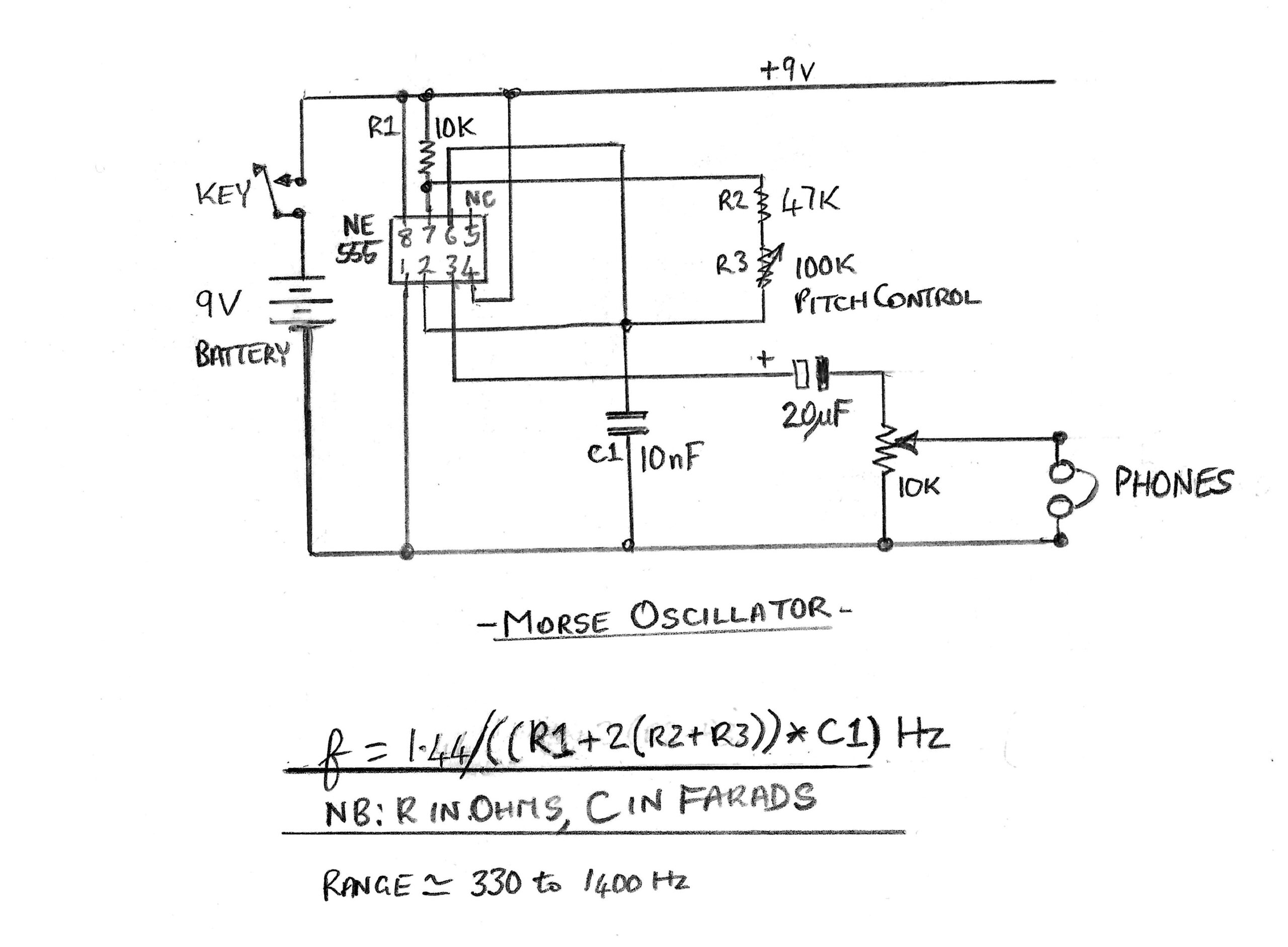
The Circuit is based around a 555 timer chip, which cost about 20 pence each and have enough output power to drive a small speaker or phones. The output pitch ranges from about 300 to 1400 Hz, but it is a square wave, so has a rather buzzy sound. This doesn’t bother me. The circuit is only energised when the key is closed, so it will run off a PP3 9 volt battery.

I built it into an 80 x 80 x 40 mm plastic box using a small piece Vero board I found in my scrap box. I used two 3.5 mm jack sockets for the key and the phones. I put a 40 mm speaker into the box but then realised that the jack sockets didn’t have a switch to disconnect the speaker when the phones were plugged in, so I didn’t connect the speaker.
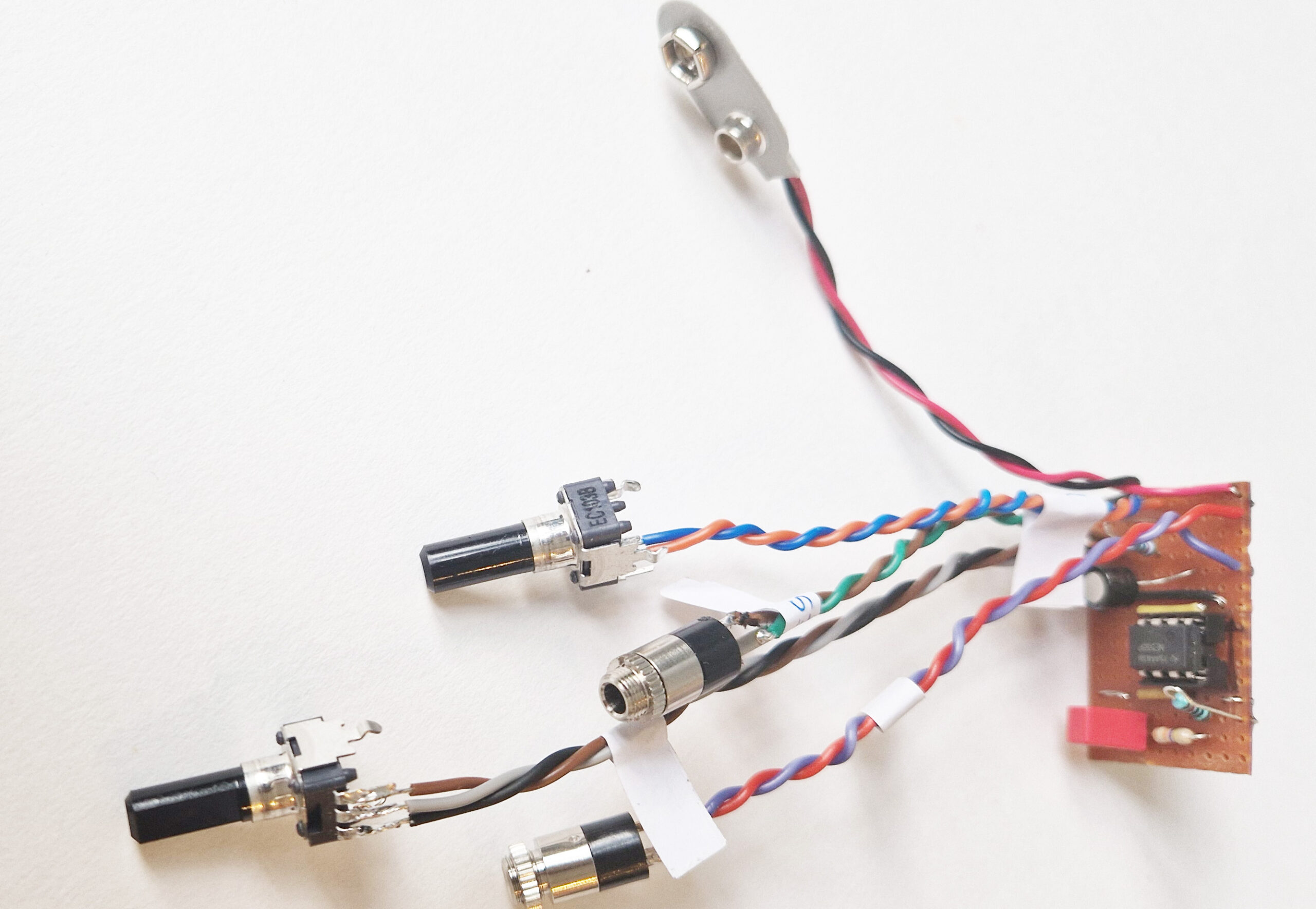
Also I realised that I only had 10 kΩ potentiometers in my spares kit, so to get the frequency low enough, I put a 67 kΩ resistor in series with the frequency pot to get it into the right range.
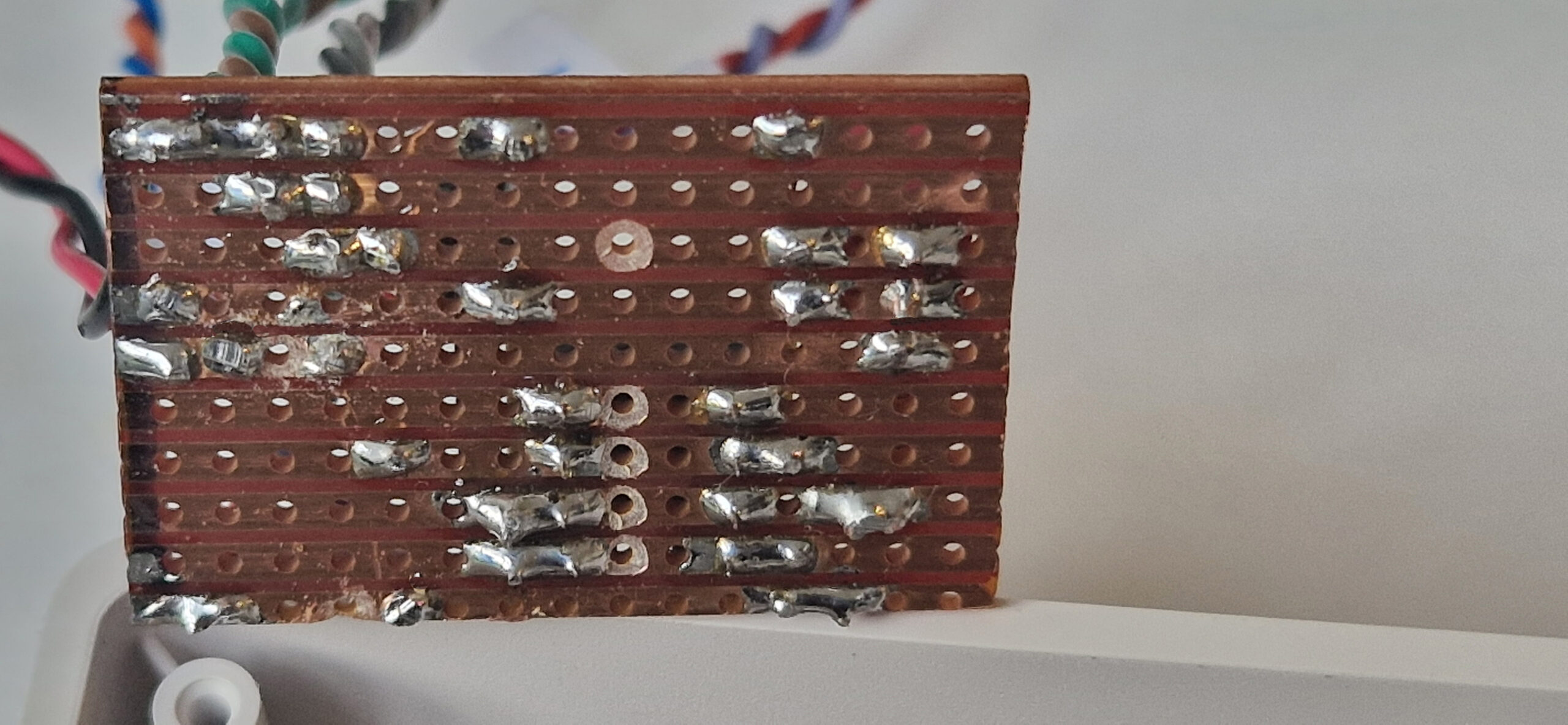
The solder side isn’t very neat – I think I was anxious to finish it!
It worked first time, thank goodness!
But now I’m thinking about Iambic Keyers – hopefully more news soon!